№ / JOURNAL
Fabric Width Explained: 110 cm vs. 140 cm — Which Should You Buy? (With Quick-Reference Chart)
Bottom Line First: Fabric Width Is the Horizontal Measurement — Get It Wrong and You Won't Have Enough
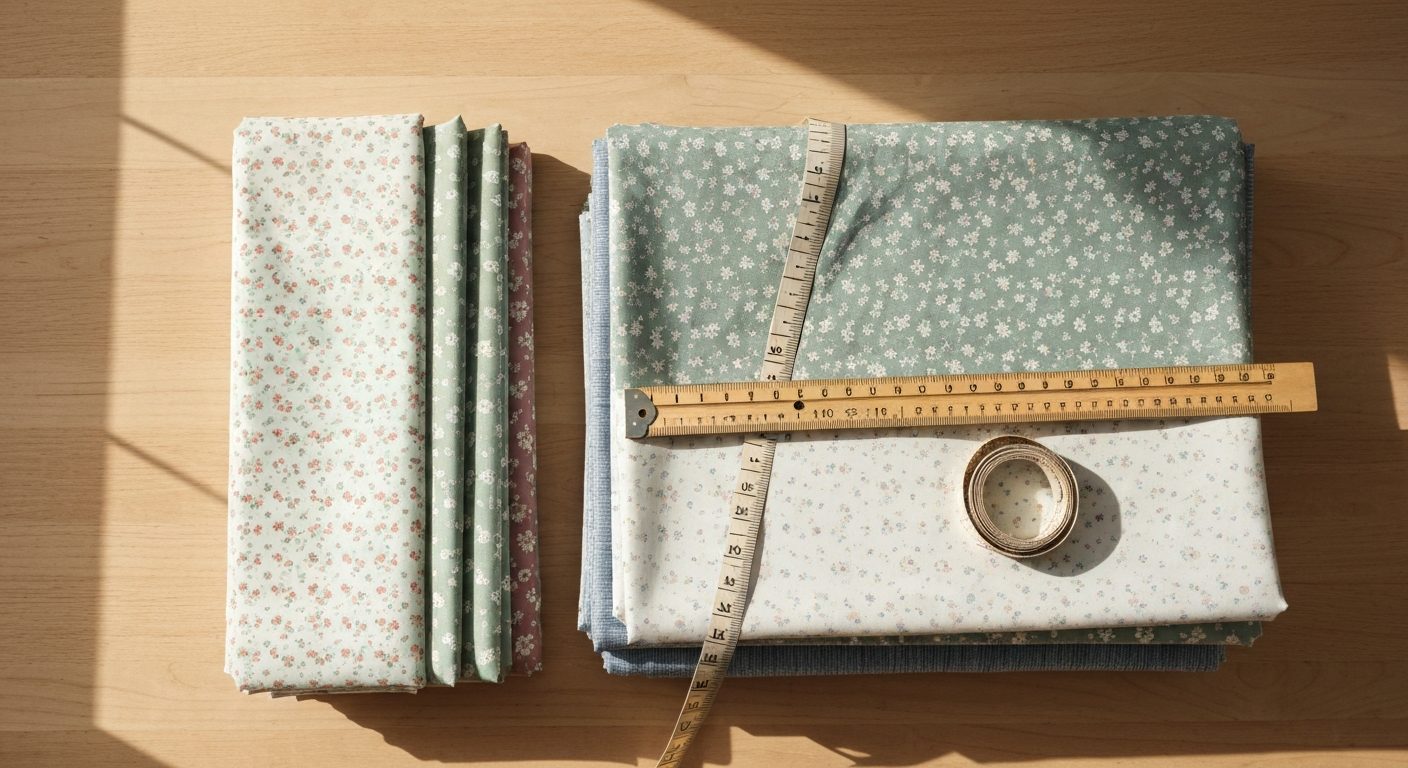
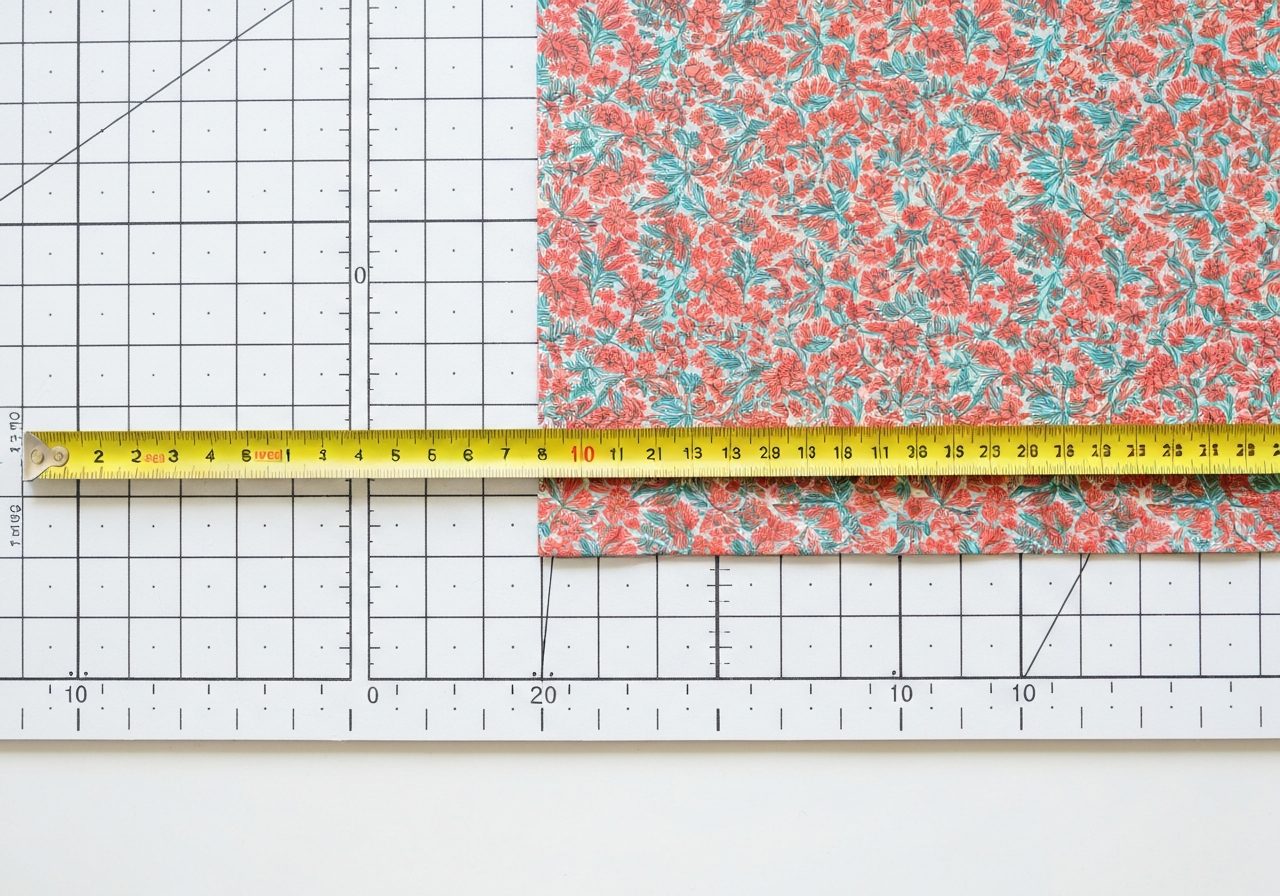
Fabric width (sometimes called "selvedge to selvedge") is the fixed horizontal measurement of a cloth roll, printed on every product page. The two most common widths are 110 cm (approx. 43 in.) and 140 cm (approx. 55 in.). The simple rule: 110 cm works perfectly for small projects, quilting, and children's clothing; 140 cm saves fabric and effort for adult garments, home décor, and bedding.
Buying the wrong width forces you to add an extra seam — that costs time and throws off your proportions. Always check the width before you check the print.
What Exactly Is Fabric Width? A Plain-English Explanation
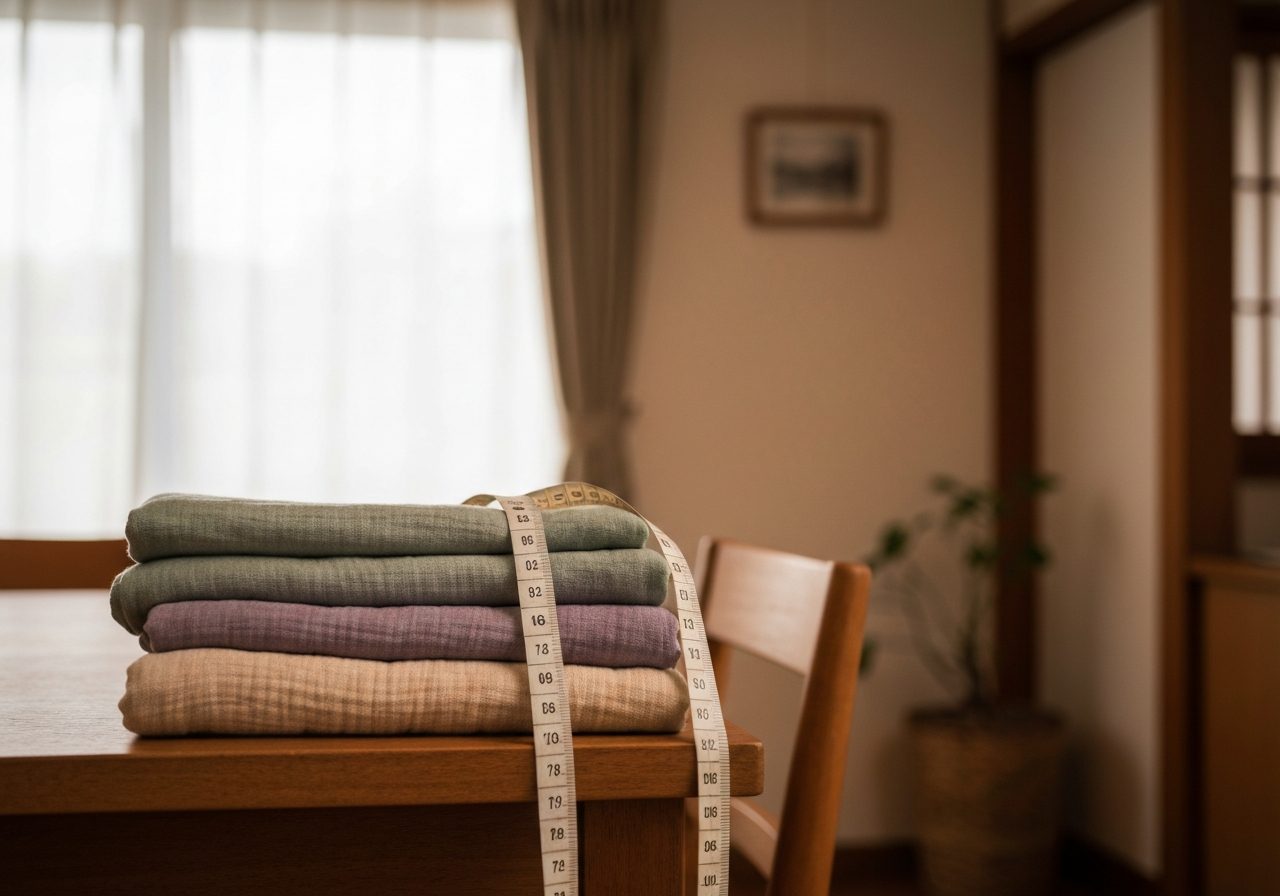
Picture a roll of fabric laid flat on a table. The distance from left edge to right edge is the width. At 110 cm, that's roughly the width of a single-bed headboard; at 140 cm, it's close to the long side of a standard dining table.
When you order fabric by the yard, you are buying length — the width stays fixed. So "2 yards of 110 cm fabric" gives you a piece roughly 73 inches (2 yards) long and 43 inches wide.
- Length (vertical) = the yardage you order; you choose how much to cut.
- Width (horizontal) = fixed for each fabric style; you cannot change it.
- Total area = length × width — this determines whether your pattern pieces will fit.
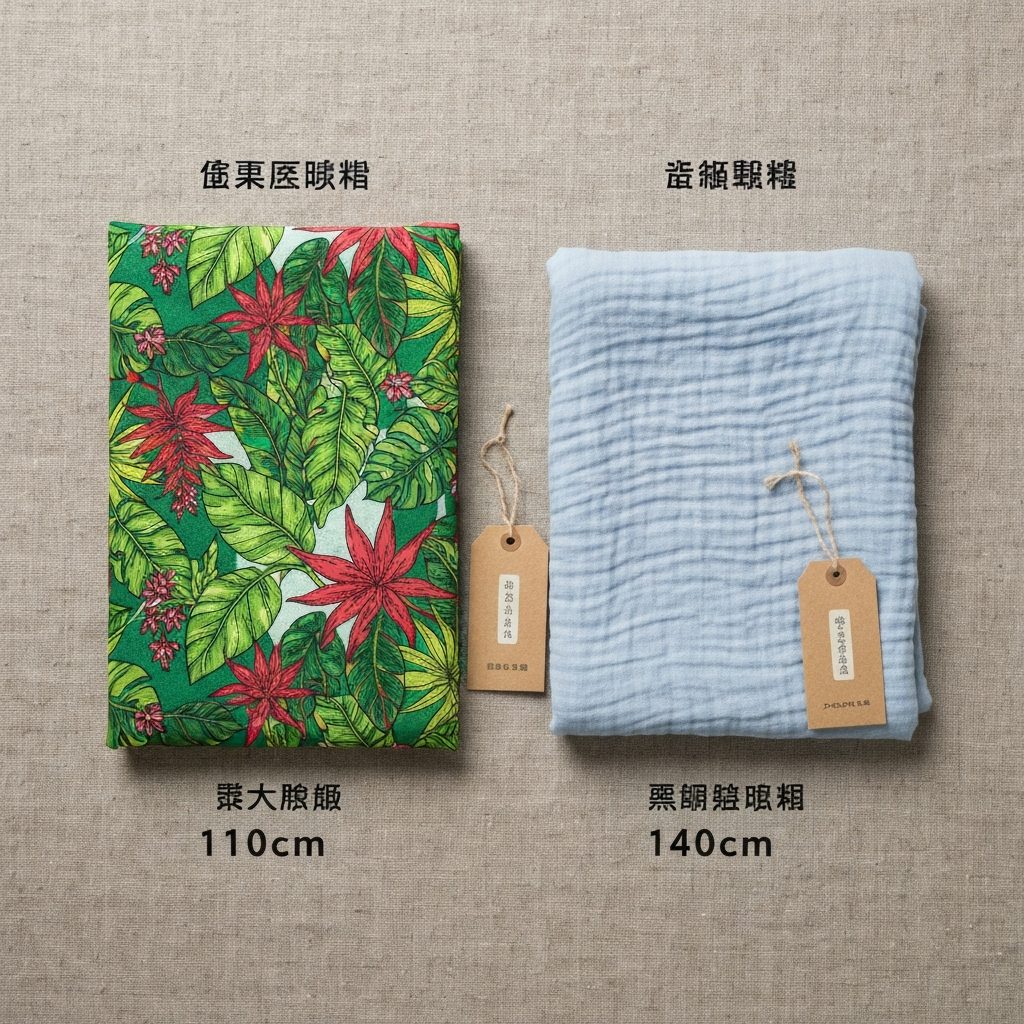
Why Do Different Fabrics Have Different Widths?
Width is set by the loom used to weave the cloth, not by the seller.
Taiwan-Milled Cotton Prints: Typically 110 cm
Traditional cotton looms in Taiwan and Japan produce quilting-weight and printed cotton at a standard width of 108–112 cm, universally called the "110 cm width." cocochi's house Taiwan-designed original print collections — including our Taiwan flora and fauna, nostalgic Taiwan, fairytale, and seasonal celebration series — fall in this range. They are ideal for small accessories, patchwork, and children's apparel shell fabric.
Japanese Imported Fabric: 110 cm for Quilting Cotton; 140 cm+ for Double Gauze and Performance Cloth
Japanese imported double gauze and performance cottons are woven at 140–150 cm, which reduces cutting waste when laying out full garment patterns. The double gauze and pure-cotton performance fabrics that cocochi's house imports directly from Japan in original rolls are all in this wider format — perfect for tops, jackets, and skirts that need full-width pattern pieces.
Custom Digital Printing: Confirm Width During Sampling
If you are ordering custom digital printing (minimum 20 yards; proofing available), the production width can be confirmed with our team during the sampling stage and adjusted to your actual needs.
Quick-Reference Chart: Which Width and How Many Yards?
Based on adult size M and standard dimensions, with roughly 10 % shrinkage and seam allowance already included.
| Project | Suggested Width | Suggested Yardage | Notes |
|---|---|---|---|
| Small drawstring bag | 110 cm | ½ yd (≈ 18 in.) | Makes 2–3 bags per cut |
| Medium tote bag | 110 cm | 1 yd | Pair with heavyweight interfacing |
| Children's top (size 110 / approx. age 5) | 110 cm | 1–1¼ yd | Add ¼ yd for larger sizes |
| Adult top (size M) | 140 cm | 1½–2 yd | Using 110 cm? Add ½ yd extra to compensate for width |
| Adult knee-length skirt | 140 cm | 1¼–1½ yd | A-line silhouette uses less fabric |
| Standard pillowcase (50 × 70 cm / 20 × 27 in.) | 110 cm or 140 cm | ⅞ yd | Includes seam allowance and flap overlap |
| Patchwork wall hanging (60 × 60 cm / 24 × 24 in.) | 110 cm | ⅓–½ yd per colour | Distribute by colour block layout |
※ 1 yard = 91.4 cm (36 in.). All figures are general guidelines — adjust for your own pattern.
Three-Step Fabric Yardage Formula
Prefer to calculate rather than guess? Follow these three steps:
- Measure the longest edge of your pattern piece (e.g., back bodice length = 65 cm / 25½ in.).
- Multiply by 1.1 to account for shrinkage and seam allowance → 65 × 1.1 = 71.5 cm (≈ 28 in., just under ¾ yd).
- Check whether the width is enough: if your widest pattern piece (e.g., shoulder width plus seam allowances on both sides) exceeds the fabric width, you must either rotate the piece or buy extra length to compensate.
If your widest piece is 55 cm (21½ in.), a 110 cm roll lets you nest two pieces side by side and halves your yardage. If your widest piece is 75 cm (29½ in.), you need 140 cm fabric — otherwise you'll have to piece the panel, which adds visible seams.
A Note on Shrinkage
Standard cotton typically shrinks 3–8 % after the first wash. Double gauze shrinks a little more; we recommend pre-washing and pressing before cutting. For the Japanese imported double gauze carried by cocochi's house, budget 8–10 % shrinkage — which is exactly why the ×1.1 multiplier works: it covers you in almost every case.
110 cm or 140 cm? A Simple Decision Guide
- ✅ Choose 110 cm for patchwork, small accessories, children's apparel shell fabric, and prints with a tight repeat where pattern-matching matters. Also a good choice when you want to test a design with a smaller initial purchase.
- ✅ Choose 140 cm for adult garments, shirt-dresses, jackets, home décor, and curtains — anything where reducing seams and cutting waste matters.
- ⚠️ If any pattern piece is wider than 110 cm, you must use 140 cm fabric. Piecing that section creates a visible seam and weakens the piece.
- ⚠️ Still unsure? Lay your widest pattern piece on a table, measure across, and compare to the listed fabric width. Takes about five seconds.
Every product page on cocochi's house clearly states the fabric width. If you're still not certain, get in touch — message us on LINE at @kaiyofabric, tell us what you're making, and our team will recommend the right fabric and yardage for your project.
Summary
Fabric width isn't just a spec number — it determines how many yards you need, how you arrange your pattern pieces, and whether your finished piece will have unwanted seams. Keep it simple: 110 cm for small projects and children's wear; 140 cm for adult garments and home décor. Always multiply your measured length by 1.1, and you'll never come up short.
Want more fabric spec guidance, or ready to request a quote for custom digital printing (minimum 20 yards, proofing included)? Get in touch via LINE @kaiyofabric — our team is ready to help you find exactly the right fabric.
№ / FAQ
FAQ
- Q. What does fabric width mean, and where do I find it when ordering online?
- Fabric width is the selvedge-to-selvedge measurement — the fixed horizontal distance across a roll of cloth. It is always listed in the product specifications on cocochi's house product pages. You choose how many yards (length) to buy; the width is set by the loom and cannot be changed.
- Q. Can I use 110 cm fabric to sew an adult top instead of 140 cm?
- Yes, but you'll need to buy more yardage to compensate. If any single pattern piece is wider than 110 cm, you'll also need to piece that section, which adds a visible seam. As a rule of thumb, add at least ½ yard when substituting 110 cm for 140 cm on adult garments, and check that your widest piece still fits within the 110 cm width.
- Q. How much does Japanese double gauze shrink, and how should I handle it before cutting?
- Japanese double gauze typically shrinks 8–10 % after the first wash. cocochi's house recommends pre-washing the fabric once in cool water, then pressing it flat before cutting. To account for this, always multiply your required length by 1.1 when calculating how many yards to order.
- Q. What is the minimum order for custom digital fabric printing, and can I choose my own print width?
- Custom digital printing at cocochi's house (operated by KAIYO FABRIC CO., LTD.) starts at 20 yards, and proofing is available. Print width can be discussed and confirmed during the sampling stage to match your production requirements. Get in touch via LINE @kaiyofabric for a quote.
- Q. Does cocochi's house ship fabric internationally, and do you work with small indie brands?
- cocochi's house works with international designers, indie children's apparel brands, and craft businesses outside Taiwan. Our clients have included established names such as a leading Taiwanese childrenswear label and international licensed character products. For international orders and OEM enquiries, please get in touch directly at LINE @kaiyofabric so we can discuss shipping, minimums, and sampling options.
№ / READ NEXT
Read next
Morandi vs. Bold Prints: How to Choose the Right Fabric Colour Style for Your Collection
May 18, 2026
Custom Printed Fabric: The Complete 4-Stage Process — From Artwork to Finished Bolt
May 18, 2026
Printed Fabric vs. Solid Fabric: Which Should You Choose? 4 Decision Angles for Designers and Makers
May 18, 2026