№ / JOURNAL
Printed Fabric vs. Solid Fabric: Which Should You Choose? 4 Decision Angles for Designers and Makers
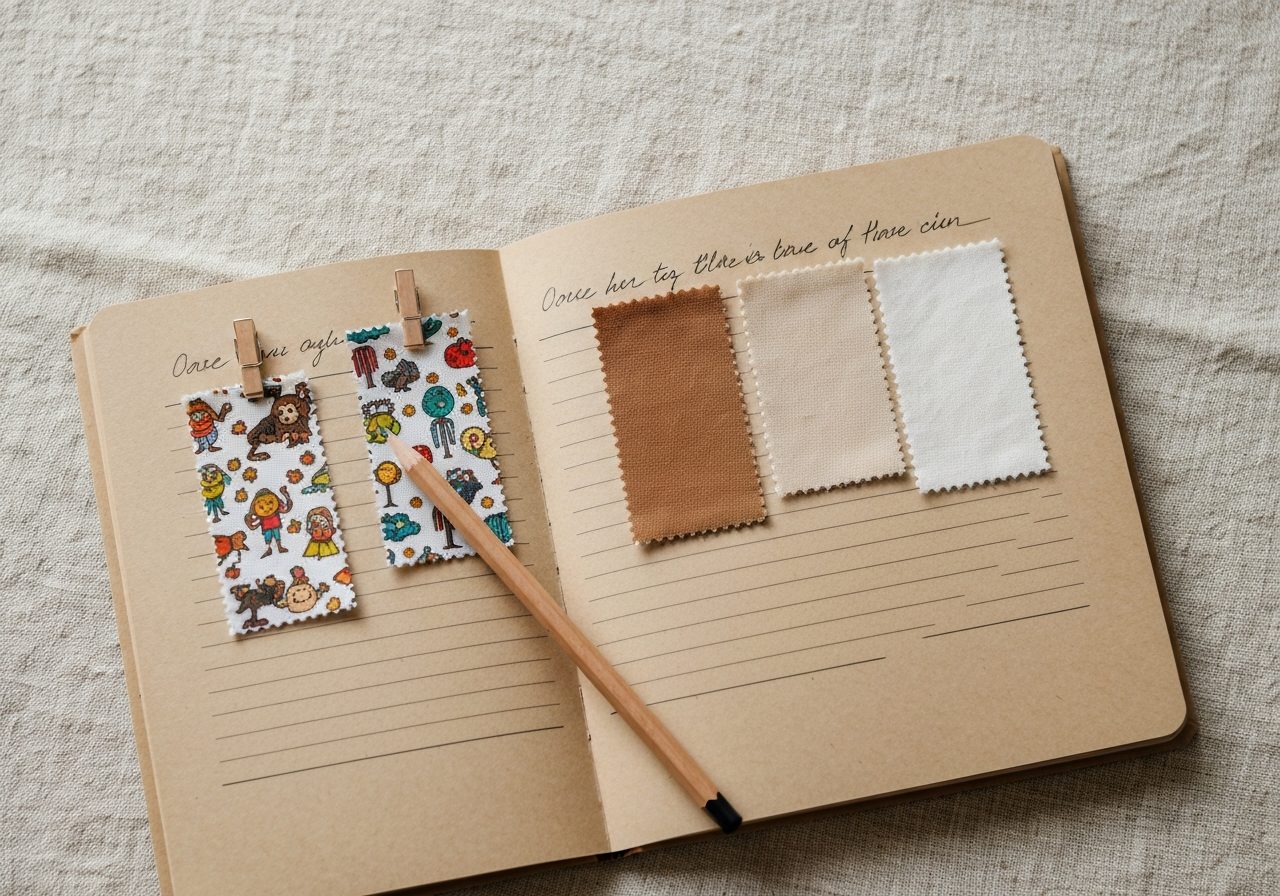
Start Here: 4 Questions That Point You in the Right Direction
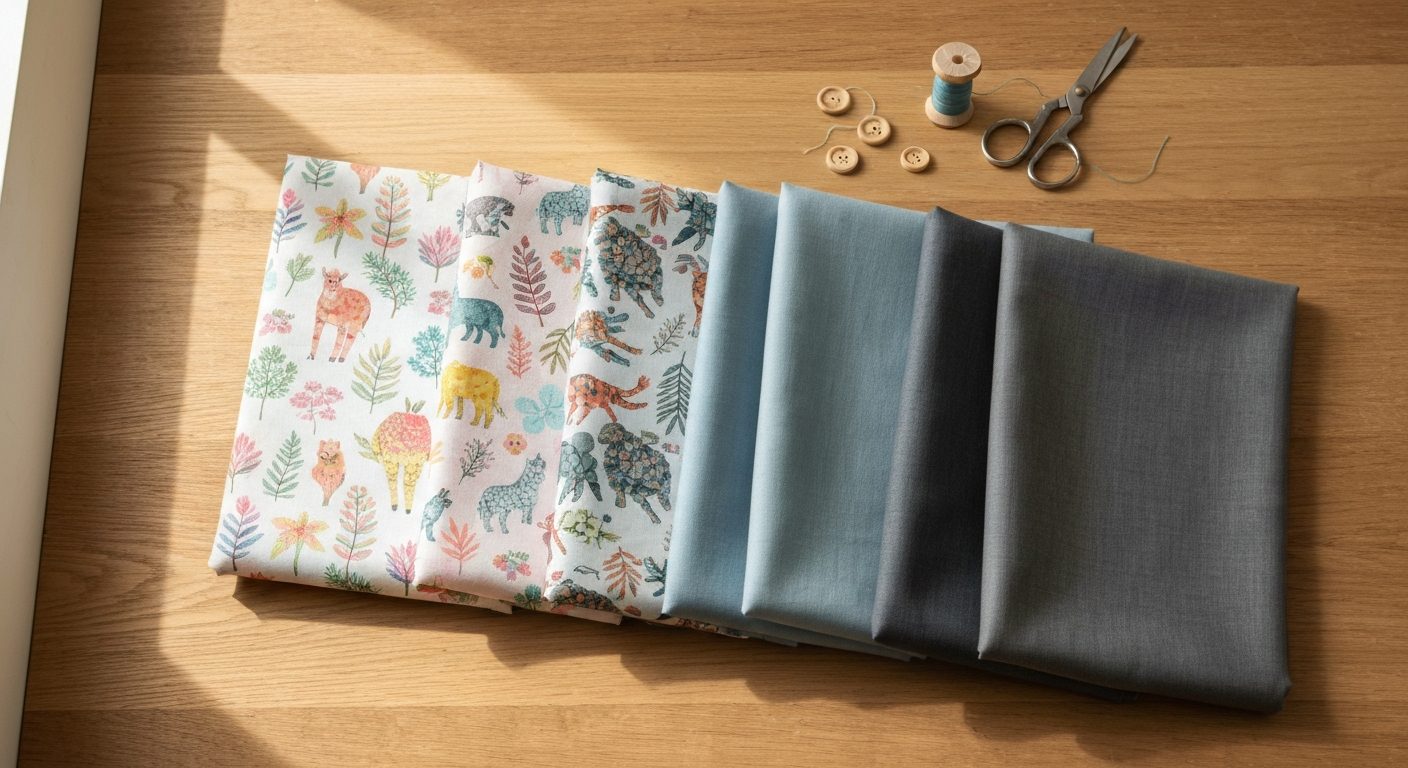
Stuck choosing between a printed fabric and a solid? You don't need to go with gut feeling. Answer these four questions honestly, and the right direction will surface on its own:
- Is this piece the hero or the supporting act? Hero pieces can take a bold print; supporting pieces work better in a quieter solid.
- Are you making for children or adults? Younger kids respond naturally to high-saturation prints. Adult buyers often prefer more restrained palettes.
- Do you want the fabric to do the talking, or the cut? Printed fabric draws the eye to the cloth itself. A solid lets a well-executed silhouette shine.
- Are you confident matching pattern repeats? Directional prints and large motifs raise the bar for sewists who are still building their skills.
If three out of four answers lean the same way, that's your direction. Read on for a closer look at what each fabric type actually does well — and where each one trips you up.
Printed Fabric: Strengths and Limitations
Strengths
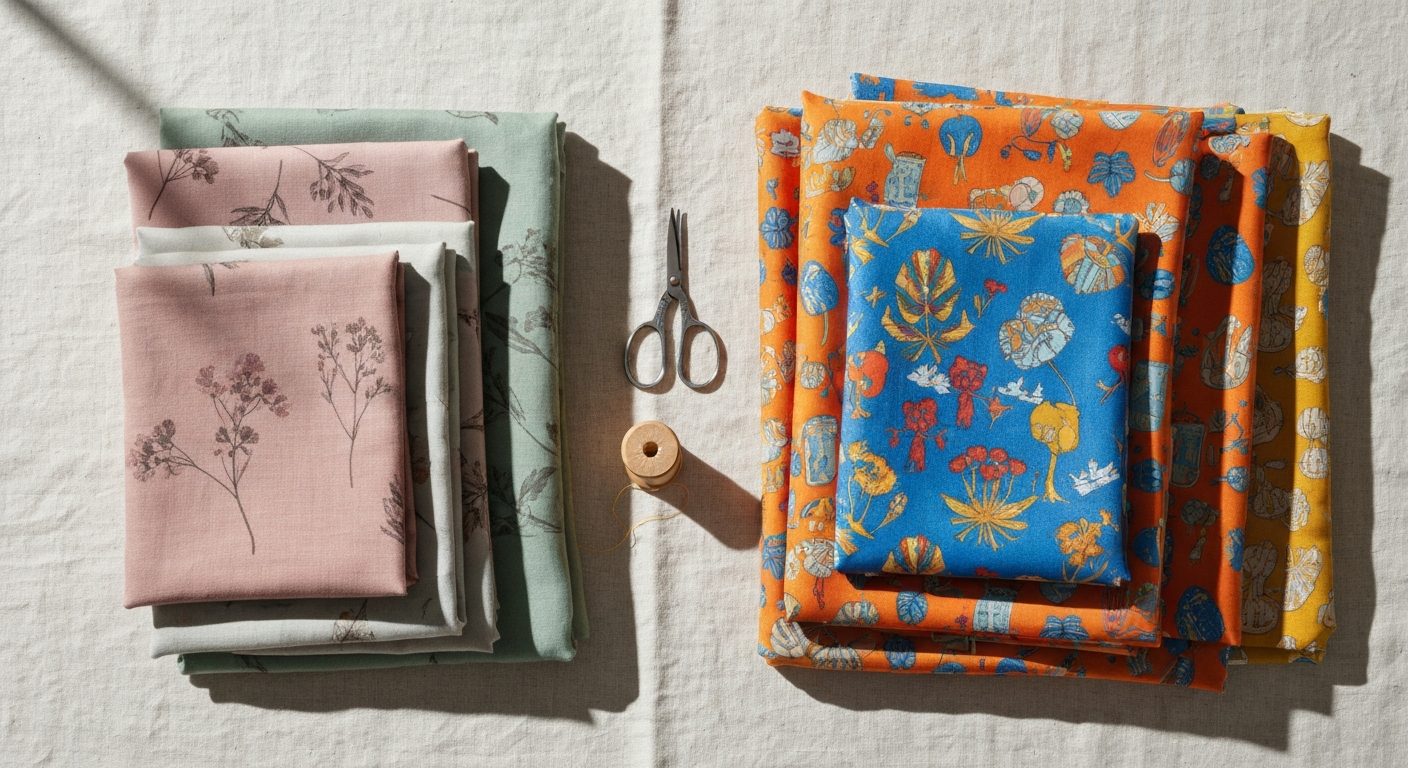
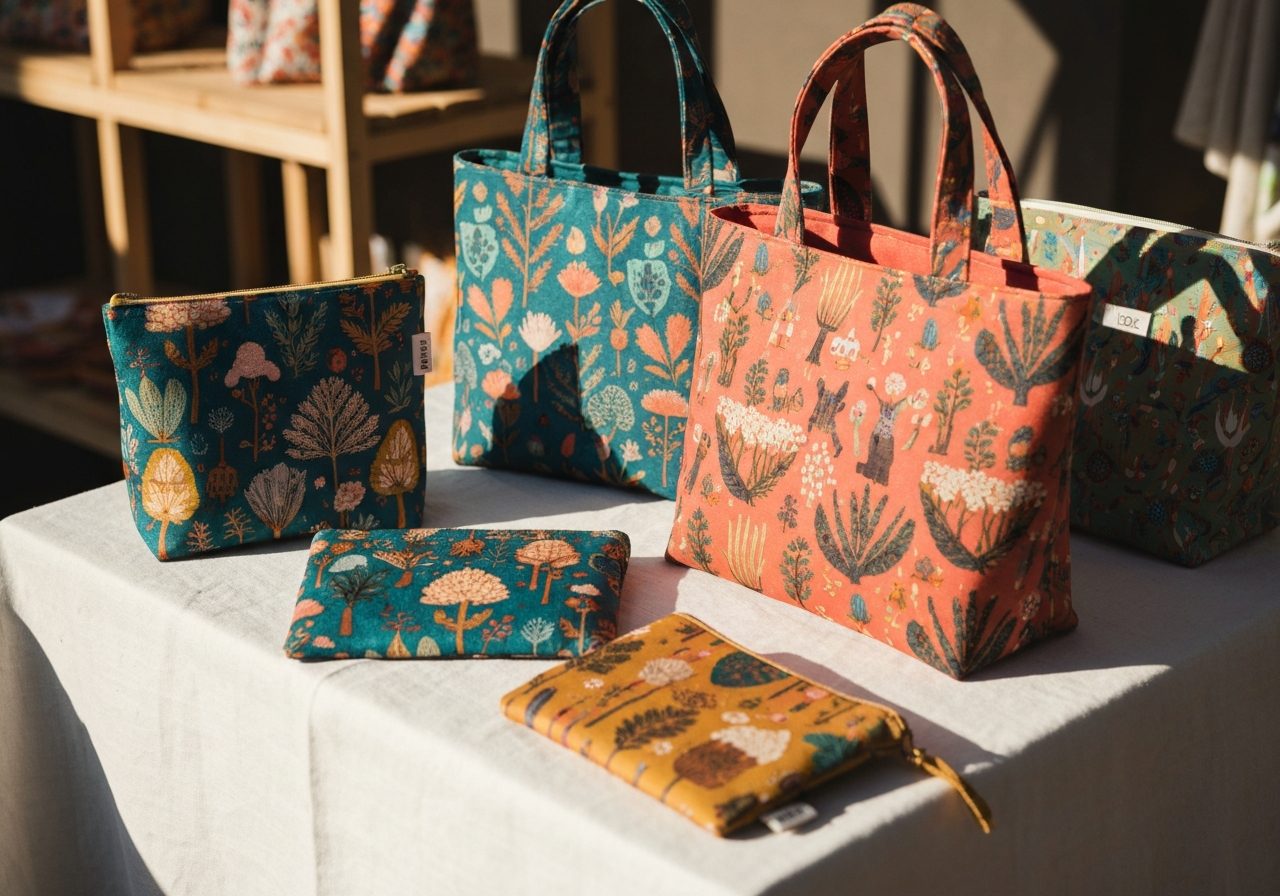
A great printed fabric carries its own story. The right design laid out on a market table stops people mid-step — no extra styling needed. The piece already has a memory.
- Instant visual pull: At craft markets, on social media, or in an online shop thumbnail, Taiwan-designed printed fabric competes on its own. It grabs attention before a shopper reads a single word.
- Works beautifully as a standalone item: Tote bags, coin purses, children's aprons — these are pieces people evaluate at a glance. A cohesive original print cotton fabric makes them feel complete without elaborate construction details.
- Exclusivity through original design: cocochi's house original print series — including the Taiwan Flora & Fauna, Taiwan Nostalgia, and Fairy Tale collections — are designed in-house and unavailable anywhere else. Pieces made from these fabrics simply cannot be copied by the next vendor at the fair.
Limitations
- Pattern matching takes skill: Large motifs and directional prints must align at every seam. For sewists who are newer to the craft, this increases fabric waste and the chance of a crooked repeat at a seam line.
- Less room for colour error: Two high-saturation prints placed side by side can clash badly. Combining printed fabrics successfully requires a calibrated eye.
- A strong print competes with a strong silhouette: If the construction itself is the design statement — structured pleats, interesting seaming — a loud print will fight it rather than support it.
Solid Fabric: Strengths and Limitations
Strengths
A solid fabric is the all-rounder of any maker's toolkit. It doesn't demand attention, but it holds the entire composition together.
- Lets the cut speak: Pleats, topstitching, three-dimensional shaping — these details read clearly on a solid. Solid fabric is the natural choice when you want to showcase construction craft.
- Pairs with almost anything: Zips, embroidery thread, other fabrics — solids absorb combinations without friction. Pairings rarely go wrong.
- Ideal for custom orders: When a client requests a specific colour, solid fabric can be matched accurately to a Pantone reference or a physical colour swatch. A print simply cannot offer that precision.
Limitations
- Can read as plain without supporting elements: An all-solid piece has to earn its visual interest through shape, hardware, or embellishment. On its own, it can disappear in a crowded product grid.
- Fabric quality becomes more visible: Without a print to carry the eye, drape, weave density, and colour consistency are all exposed. A lower-quality solid shows its weaknesses immediately.
The Formula That Works: Pairing Printed and Solid Fabric
The most commercially successful handmade pieces rarely go all-print or all-solid. The approach that consistently works is one lead fabric supported by one quiet partner. Keep this ratio in mind:
Printed fabric for 60–70% of the piece, solid for the remaining 30–40% — or flip it: a solid body with a printed pocket lining or accent panel.
A few principles that apply across almost every project:
- Pick one colour from the print and repeat it in a solid trim, strap, or binding. That single decision gives the finished piece a designed, intentional feel.
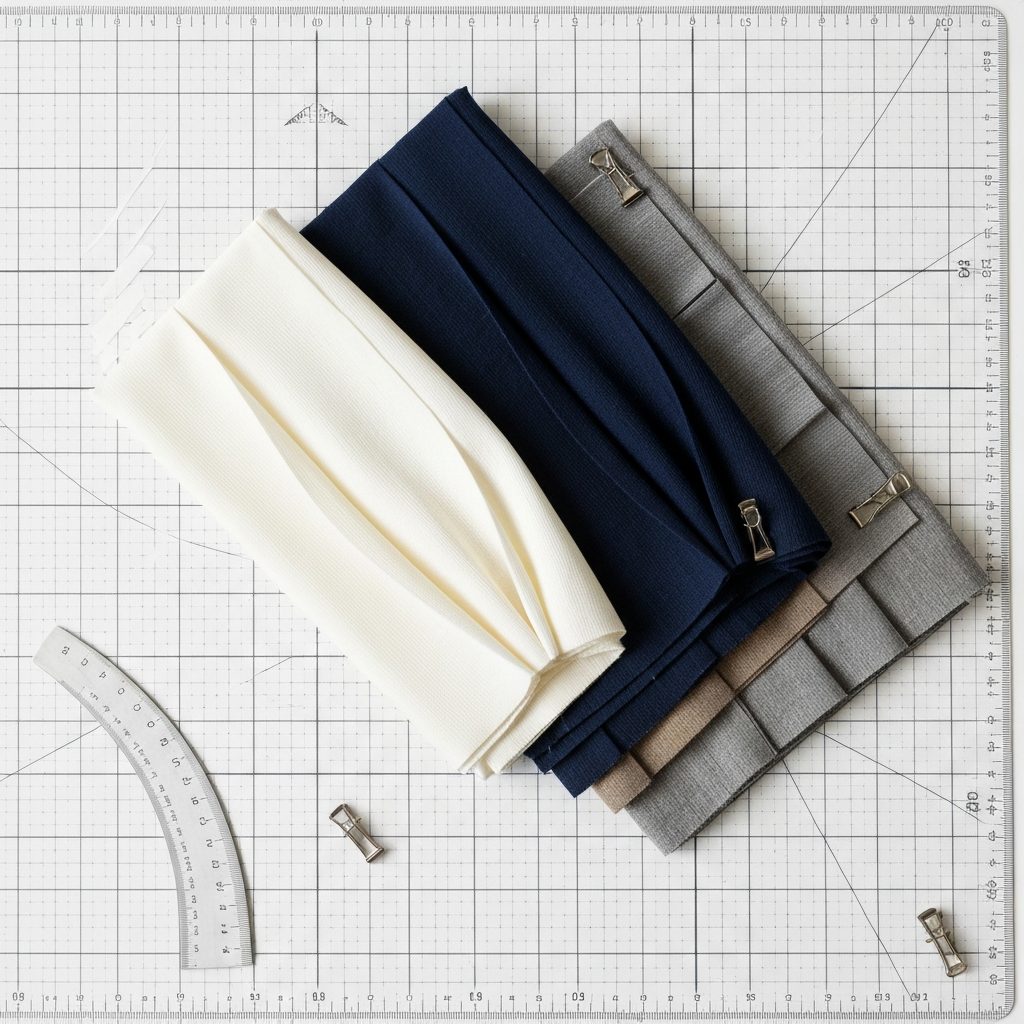
- The more complex and multi-coloured the print, the more neutral the solid should be. Off-white, navy, and charcoal grey are reliable anchors.
- Where possible, choose a solid fabric in the same fibre content and weight as the print. Consistent hand-feel is what separates a polished product from something that feels pieced together.
Three Pairing Ideas from cocochi's House
① Children's Tote: Taiwan Flora & Fauna Print × Off-White Cotton Solid
The Taiwan Flora & Fauna original print series uses a lively, colourful palette that reads immediately as a children's piece. Use it for the bag body and pair it with an off-white cotton solid for the handles and base reinforcement. The cotton fabric is 110 cm (approximately 43 inches) wide, so a single cut can yield both the main panels and the handle strips with minimal waste.
② Everyday Adult Tote: Fairy Tale Print × Navy Double Gauze
The Fairy Tale series has finer linework and a softer overall tone that works well for adult buyers. Use the printed cotton for the outer shell, then line it or bind the edges in navy Japanese-imported double gauze. The gauze adds a subtle weight and layered texture without making the bag feel heavy or over-designed.
③ Seasonal Gift Bag: Festive Series Print × Solid Satin in Red or Gold
For Lunar New Year, Christmas, or wedding favours, the cocochi's house Festive series combined with a solid satin pocket or drawstring handles the occasion in one confident colour story. The Festive series runs saturated — choose a deeper tone from the same colour family, or metallic gold, for the solid elements to lift the whole piece.
Fabric for all three combinations is available at cocochishouse.com. If you'd like help confirming yardage or fabric width for a specific project, get in touch via LINE @kaiyofabric and the team can work through the details with you directly.
One Last Thought Before You Choose
Choosing fabric isn't purely about personal preference — especially if you're making to sell. Before you cut, ask yourself: What does a first-time buyer feel in the first second they see this? That reaction is the real brief. The fabric that produces the right reaction is the right fabric.
cocochi's house original print collections refresh every season, and Japanese-imported fabric lines are restocked on a rolling basis. If you need something entirely your own — your artwork, your colourway — small-batch custom digital printing is available from a 20-yard minimum, which makes it accessible for indie textile designers and small children's apparel brands who need to stand out without a large upfront commitment. Ready to explore? Request a sample online or get in touch via LINE @kaiyofabric.
№ / FAQ
FAQ
- Q. What is the minimum order for custom digital printing at cocochi's house?
- Custom digital printing — where you supply your own artwork or pattern — starts at a 20-yard minimum. This makes it practical for indie children's apparel brands, indie textile designers, and craft businesses that want a completely original fabric without a large bulk commitment. Get in touch via LINE @kaiyofabric or through cocochishouse.com to start a sample request.
- Q. Do cocochi's house fabrics come pre-washed, and what widths are available?
- Most cotton fabric in the cocochi's house range is 110 cm (approximately 43 inches) wide. Pre-washing details and care instructions vary by fabric type — the team recommends contacting the shop directly via LINE @kaiyofabric to confirm specifications for your specific fabric before cutting, especially for children's wear projects where shrinkage tolerance matters.
- Q. I'm new to sewing. Should I start with a printed fabric or a solid?
- For most beginners, a small-scale allover print (no strong directional repeat) or a solid fabric is the easier starting point. Large motifs and directional prints require careful pattern matching at seams, which increases fabric waste and complexity. Once you're comfortable with your seam allowances and pressing technique, directional prints become much more manageable.
- Q. Can I order fabric internationally from cocochi's house / KAIYO FABRIC CO., LTD.?
- Yes. cocochi's house (operated by KAIYO FABRIC CO., LTD. in Taiwan) ships internationally. For specific shipping rates, lead times, and import considerations, use the contact form at cocochishouse.com or reach the team via LINE @kaiyofabric. For larger orders — including OEM children's wear or custom digital printing runs — direct enquiry is recommended so the team can confirm the best shipping method for your volume.
- Q. What makes cocochi's house original prints different from other printed fabric suppliers?
- cocochi's house designs are created in-house by a team with over 40 years of pattern-making experience and are exclusive to the brand — they are not licensed or resold through other suppliers. Series such as Taiwan Flora & Fauna, Taiwan Nostalgia, and Fairy Tale are not available anywhere else on the market, which means finished pieces made from these fabrics are genuinely non-duplicable. The brand has supplied fabric to established names including a leading Taiwanese childrenswear label and international licensed character product lines.
№ / READ NEXT